

Root condition
And making sure our roots get watered.
Hello friends,
Well, enough of you requested more about causality, that I thought I would get started. The entirety of cause and effect, or Patthana as we call it in Pali, is way too much for one newsletter. But helpfully, the Buddha loved a list, and first on the list is root condition.
Before we get into root condition, let me explain what we mean by “condition” in the first place. In English we don’t have such clear vocabulary around causality. If we say A “causes” B, we could mean any number of things. We could mean A supports B, A nourishes B, A produces B, A influences B, and so on. In Pali, all these different types of cause are called paccaya (pronounced pach-ay-a). The totality of the workings of all of these paccaya, is Patthana.
The first of the paccaya is hetu paccaya. In English we call it root condition. Hetu means root. Just as in nature, so too in the mind: some things have roots, other things do not. Specifically, the mind is made up of many moments of consciousness arising and passing away one after the other, extremely quickly with no gap in-between. Some of those mind moments have roots. Others do not.

So, if you are a mind moment, what does it mean for you to have roots, and what does it mean for you to not have them?
In brief, if you are a mind moment without roots, then you can’t give any fruit. You do a present moment task and that’s it. If you are a mind moment with roots, you either can bear fruit, or you are the fruit. The type of fruit depends on the kinds of roots you have.
There are six kinds of root. Three of them give rise to bitter fruit, three of them give rise to sweet fruit. Some of them always grow together.
The three bitter roots are greed, hatred, and delusion. The way they grow is either greed+delusion, hatred+delusion, or just delusion by itself. Maybe you can understand why they pair up in this way: in order to be greedy or hateful, you need to be deluded. The three sweet roots are non-greed, non-hatred, and non-delusion. I always wish they had named those roots in a more inspiring way, but you can think of them like the total opposites of the first three. Non-greed is the root of generosity, renunciation, letting go. Non-hatred is the root of loving-kindness, acceptance, and compassion. Non-delusion is the root of wisdom and of seeing things as they really are. The way these pair up is either non-greed+non-hared, or all three of them together: non-greed+non-hatred+non-delusion. Those three sweet roots all together is what we most want to cultivate.
So, how are these roots a “condition” and what are they conditioning?
Well, like with a tree, the roots themselves don’t actually produce the fruit. The roots give a certain flavour to the whole plant that will then produce the fruit. So too, the roots in a mind moment condition whatever else is going on in that same mind moment. If the mind moment is rooted in greed+delusion for example, then if that moment has effort, it will be greedy effort. If that moment has joy, it will be greedy joy. The volition of that moment will be greedy, the perception of that moment will be of wanting something, the attention will be looking on with greed. If we were to take the same mind moment, observing the same object, but rooted it in non-greed+non-hatred, then any effort in that moment would be generous, loving effort. Any joy would be generous, loving joy. The volition of that moment would be loving and giving, the perception would be without attachment, and the attention would be looking on with love and acceptance.
So that’s what root condition does. It roots the mind moment in either wholesome or unwholesome states. That mind moment can then go on to bear fruit, but that fruit is borne by way of a different condition, a famous condition, kamma condition, that we will speak about another time.
You could say that root condition determines our entire quality of life. If we cultivate those beautiful roots our mind is flooded with beautiful states and will bear beautiful fruit for a long time to come. So how do we keep those beautiful roots strong?
The answer, according to the Buddha, is wise friendship.
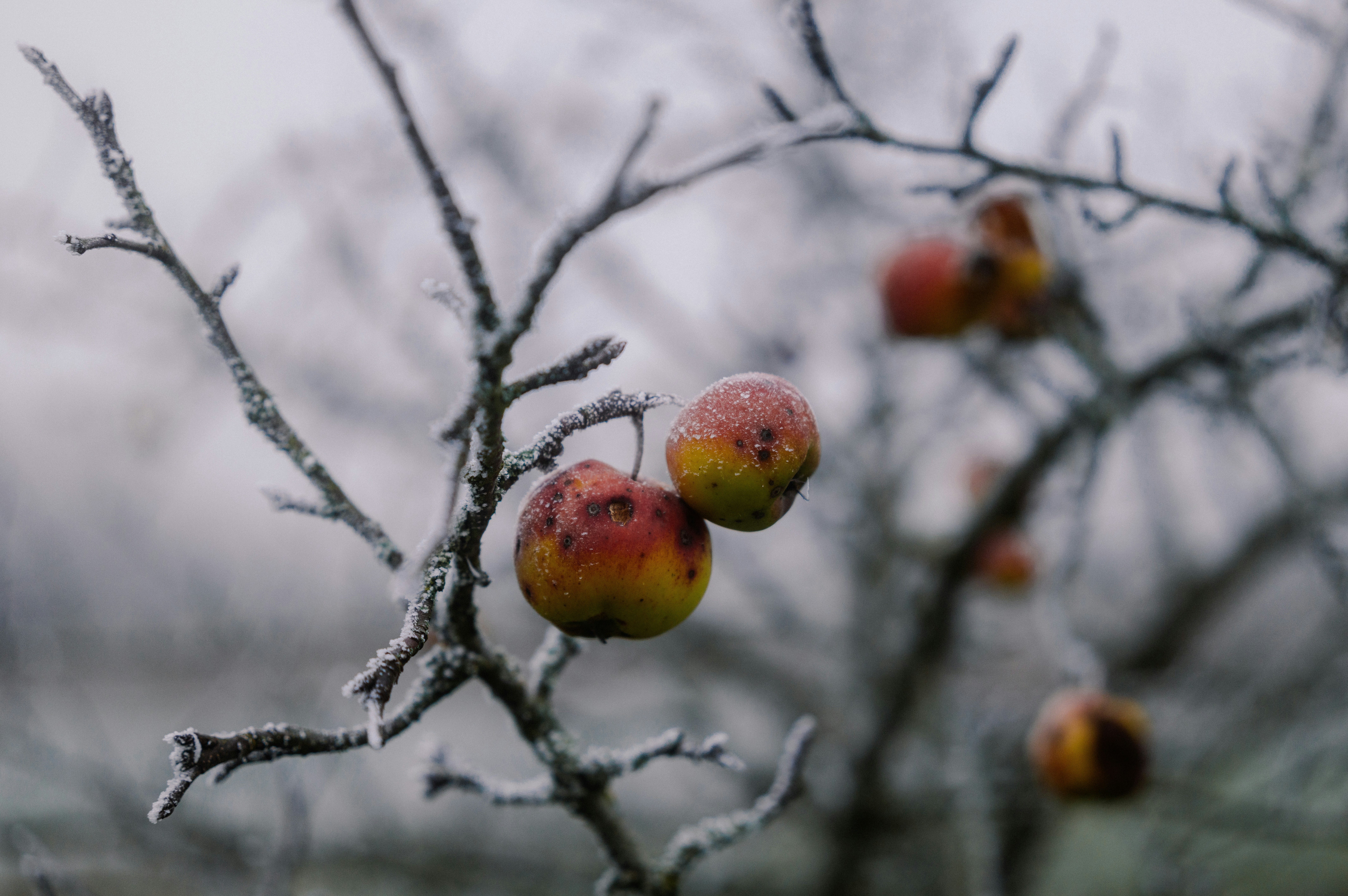
Coincidentally, I wrote a poem earlier today about someone I have been close with:
Sure, I can be
The magic self-watering tree —
Gibran’s tree —
Ripe and full and
Ever giving of my abundance.But it sure rubs salt
In these withered, aching roots
As you look on —
Apple in one hand, the other
Still clutching the watering can.
You are welcome to offer relational advice in the comments :-)
The point is our beautiful roots need watering. We need to receive enough love from ourselves and from others. We need to be around truth. We need to be grateful, and generous, and receive those things in abundance. We need silence and space to meditate, and we need people around us who do the same. Where the beautiful roots are concerned, there’s no such thing as too much of them.
It’s great to love the technical, theoretical Dhamma stuff. I love it too. But it’s no good if we don’t also live it. So I double dare you to go out and water those beautiful roots. Water your own and water those of others. Water them here in our beautiful Sangha. See what happens and let me know.
With metta and gratitude,
Beth
This suggests that it truly is a moment to moment wise attention to the roots of the mind-stream, making space and non-attachment when bitter roots are drawing water - careful not to give their precipitates credence, and then watering and nurturing the sweet roots when they draw water to precipitate fruit.
The four fold instruction, attenuating arisen unskillful states (non-attachment/involvement/identification, patience with their dissipation), removing conditions for unarisen unskillful states (noting conditions precipitating previously arisen unskillful states and being mindful of when they recur), nurturing arisen skillful states (savoring the good), cultivating conditions for unarisen skillful states (Silence, Nature, Gratitude, Beauty, Sangha etc...)
Thank you for that reminder, Beth, about wise friendship being the best way to water our roots. I wish it wasn’t true. I wish I could just give and give and it would make all relationships better. This week in the States it is the Thanksgiving holiday and Christmas is coming soon…and more family time. Sometimes it’s hard to identify wise friendship. I wished all my biological family could be wise friendship that waters my roots. I started there first but I’ve had to distinguish between biological family and dhamma family. Sometimes, there’s overlap.
One thing that’s helped identify wise friendship is the effect after I give. If I give and they are better and I feel more nourished, then it’s a good match. If not, then it’s a mismatch between the ripeness of our understanding, between our seasons so to speak. I can’t water a baby tree and expect fruit. It has to mature. And I only have so much water. But when it’s a good match, my not so perfect water will still be helpful and and their fruit won’t be perfect, but it will still be nourishing enough and hopefully we can help each other get better bit by bit.
The one exception for me has been interacting with children and animals. They always seem to be wise friendship. I have three cats and they each started out so scared and not willing to share with me. But I gave them love and they gave me a little back and it just kept growing until we trust each other so much now that we look to each other when we want to fill our bucket. We blossom just being near each other.
Adult humans….well, that takes a little more investigation. I feel your pain. I’ve been a tree before with my fruit all gone and but my roots dry and dying. I had to find better caretakers. Thank you for the Patthana introduction.