

Object condition
And one of my favourite places in the world
Hello friends,
Following the positive response to my first instalment on root condition, I have decided to dedicate one newsletter each month to Patthana.
Those of you who are loyal readers of my newsletter will remember that there are different types of cause, called paccaya (pach-ay-a). Everything in existence is related to everything else through a complex web of these paccaya. The elucidation of that complex web is Patthana. Patthana is, in a very real sense, the theory of everything.
Having already discussed hetu paccaya, or root condition, let us now move on to the second condition on the list: arammana paccaya, or object condition. Arammana means object in Pali.
In English we use the word “object” in all kinds of ways, but in Patthana, it has one specific meaning. It means the thing we are paying attention to. In this way, the table is the object if you are looking at the table, the music is the object when you listen to the radio, the nimitta is the object as you master the first jhana, and so on.
In brief there are six kinds of object - visual objects, sounds, smells, tastes, objects that we can know through physical touch, and objects that we know directly with the mind. The mind can take as an object all of the objects of the five bodily senses, and many other things too.
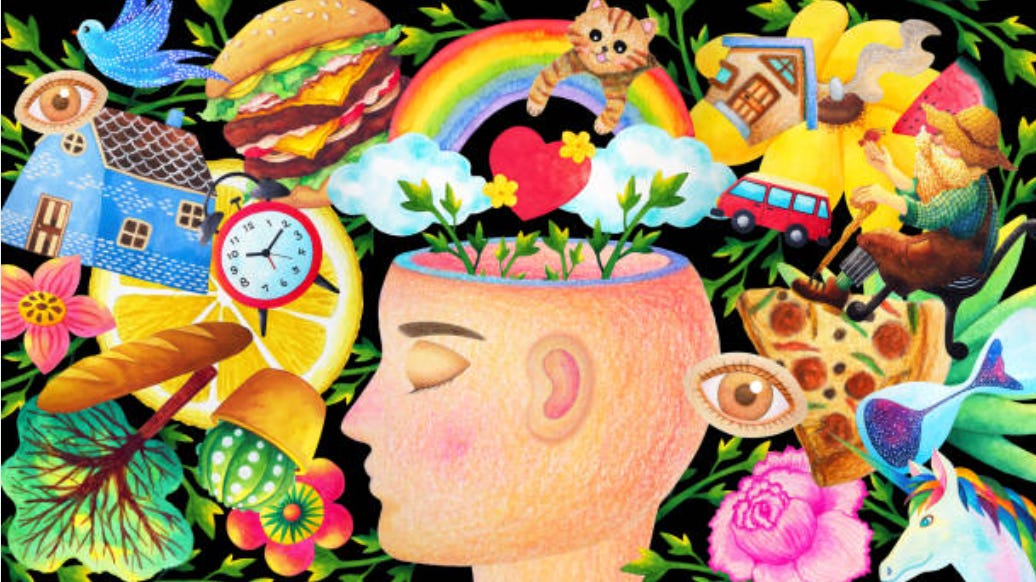
In its simplest form, object condition states that consciousness, and in fact all mentality (nama) cannot exist without an object. In other words all consciousness cognises something. You will remember that the mind is made up of many moments of consciousness, arising and passing away very quickly, one after the other, with no gap in-between. Object condition says that every single one of those moments, in all beings everywhere, past, present, and future, has an object of attention. Every single moment is cognising something. Despite it sounding mystical and profound, there is actually no such thing as “objectless awareness.”
Even in our deepest sleep, even when we pass out, even when we are lost in daydreams, or in a coma, or in the deepest states of samadhi, or in our mother’s womb, or even in the moment that we die, the mind always has an object of attention.
In addition to this, object condition states that some moments can only take certain objects. An obvious example would be that ear consciousness can only take sound as an object. In other words, we cannot hear a colour. By the same token, nose consciousness can only know smells. We cannot smell a sound. At a more exalted level, fifth jhana consciousness can only take as an object the base of boundless space, and sixth jhana consciousness only the base of infinite consciousness, and so on.
Object condition also states that certain objects can have a particularly strong impact on the mind. These objects are called arammanadhipati in Pali, which translates as predominant objects - arammana means object, adhipati means predominant. We could also think of these as powerful objects.

The Rothko room at the Tate Modern in London, pictured above, is one of my favourite places in the world. I go there often to meditate. I find these objects to be particularly powerful purifiers of my awareness. For me, they are arammanadhipati. They are powerful objects.
Another example would be the dead bodies and disgusting body parts recommended by the Buddha as meditation objects. The bloated, worm-infested corpse; the skeleton; the blood, fat, faeces, sinews… All powerful objects for the purification of our minds. During my week offline last week, I spent some intense and extended time with these disgusting objects. All I can say is that they definitely do the job. If you haven’t tried them in a while, I’d suggest you give them a go.
If we want to make it easier for ourselves to cultivate wholesome states, we can make things powerful objects on purpose. We can make ourselves a beautiful altar to meditate with; we can give beautiful, thoughtful, well-presented gifts; and, of course, we can cultivate a strong loving relationship with our meditation object…
And so I will leave you with a poem by Rainer Maria Rilke, on one of our favourite objects: the breath.
Breath, you invisible poem!
Pure, continuous exchange
with all that is, flow and counterflow
where rhythmically I come to be.Each time a wave that occurs just once
in a sea I discover I am.
You, innermost of oceans,
you, infinitude of space.How many far places were once
within me. Some winds
are like my own child.When I breathe them now, do they know me again?
Air, you silken surround,
completion and seed of my word.
As I said in our discussion on root condition, it’s great to love the technical, theoretical Dhamma stuff. But it’s no good if we don’t also live it. Let me know in the comments what some of your powerful objects are. What can you do today to bring yourself into contact with objects that will guide you in a good direction? What can you do to avoid objects that will lead you astray?
One thing you can do, right here, right now, is get off the screen and go meditate. Love that breath, or whatever else you are meditating with. Do it now! Come back later and tell me how it went :-)
With metta and gratitude,
Beth
If I’m understanding, it seems that some objects are intrinsically powerful and others you can make powerful. Funny enough, I just went to the Rothko Chapel in Houston to introduce my nieces to it. It easily conditions a cooling of the mind and body.
I also recently experienced guidance on sanghanusati and felt how powerful it would be to meditate in the presence of arahants or carry their presence with me in my daily life. It gave me such a sense of tranquility and self respect. I can see that being a powerful object if I cultivate it and carry it in my mind.
I love also learning that every moment of consciousness has an object. It gives me a grounded feeling. When I feel lost or in those hazy places like sleep and comas, I can anchor by asking what is the object that is getting the attention instead of just feeling lost or swept away.
Finally, one of the most powerful objects for me is kindness. Simple everyday things, sometimes even so simple as people existing in the same space without hurting each other like going grocery shopping. It stops my mind. There’s nothing to do but enjoy it.
I love watching people just walk around each other unaware that we are all there just coexisting, unaware they are kind in that simple act of just moving respectfully around each other. It makes me smile. I also like watching people stopping at stop lights and stop signs. I think of myself as a spy for kindness.
Sādhu Sādhu Sādhu Beth.
Powerful objects : Forgiveness and love of Dhamma and support of Buddha Sasanā.
- bringing up the deeds of the past refresh the heart and make it soft and conducive to practice.
To avoid objects leading astray : with gratitudes toward teachers & good friends that have taught me and guided me unconditionally and with loving kindness.
Sādhu Sādhu Sādhu Beth for your guidance. 🙏🙏🙏